Newsletter February 2026



How well is Romania doing now?
The fact that the Netherlands is now one of the largest investors in Romania is thanks to the entrepreneurs who formed the DRN international network together to share their experiences, creating added value for themselves.
- Member of the OECD by 2026
- Good economic figures
- Prolonged good results Romanian stock exchange
- EU semiconductor industry participation
- Country contract with Kazakhstan and by extension China
- Country contract with United Arab Emirates
 Surprise in Europe: The leader in milk production in the EU comes from Romania and is a Dutchman! And who made the statement that “In the future, manure production might be more important than milk production.”
- Gas extraction Neptun Deep starts this year, after all wells are drilled and delivering gas Romania will be Europe’s largest gas producer
- Large-scale use of AI in Romania
- Politically stable environment with tax-friendly taxation
INVITATION
The Romanian Business Day once again offers you a strong substantive program with plenty of networking opportunities. Central theme is the economic developments and investment climate in Romania.
There is also a focus on developments in startup financing and the impact of AI on Dutch and Romanian businessesWe have found a number of prominent speakers from Romania willing to share their views and their experiences with you on current developments.
We hope to welcome you to the Romanian Business Day on Thursday, March 12 in Wassenaar .
For registration and program click here
Member recruitment
On the Romanian Business Day registration forms, several entrants indicated an interest in joining the DRN which of course we look forward to!
And one submitter immediately put his money where his mouth is:
The DRN may thus be pleased to welcome Evers International EU from Sittard as a member. He is known to be the coordinator of several Romanian projects in the field of Romanian fruit growing.
Currently he has the next project in preparation:
Big data in the fruit growing chain
This is a public-private partnership from Dutch SMEs active in the fruit growing chain. A business plan is being developed in which 14 Nld companies are participating.
This cluster of 14 Dutch companies wants to meet the 3 wishes of the Romanian grower using a digitization approach: yield maximization, cost minimization and sustainability in fruit growing.
This Nld cluster acts as the first “one stop shop digitization” for the Romanian fruit sector.
Using digital tools such as GPS technology, sensors and cloud-based data analysis platforms, drone recordings, the orchard/planting is brought into the 21st century.
This improves grower decision-making, reduces environmental impact and enables higher yields per acre.
Expected benefits of digitization and digitizing the orchard will lead to significant benefits:
- More efficient use of resources: By using GPS, sensors and weather stations, we can apply water, fertilizers and crop protection products only where and when needed. This is expected to reduce consumption by 15-20%.
- Increased productivity: Real-time data allows us to respond more quickly and accurately to crop conditions, leading to higher yields per acre.
- Sustainability: Optimizing inputs and avoiding waste reduces the environmental impact of the orchard.
Sector Moldova
The Republic of Moldova and the EU have abolished roaming charges as of Jan. 1.
Citizens of the Republic of Moldova traveling to the European Union, as well as EU citizens visiting Moldova, will be able to use mobile telephony at the same rates as in their own country from January 1, 2026. This reports the Ministry of Economic Development and Digitalization of the Republic of Moldova
 The new “Roam Like at Home” agreement (RLAH) means that calling, texting and mobile Internet will no longer incur extra charges when you are abroad.
It makes communication easier and cheaper, and access to digital services abroad easier and more secure.
“The agreement has come about thanks to the close cooperation between the Republic of Moldova and the European Union and shows Moldova’s progress in complying with European standards in the field of telecommunications and consumer protection. Eliminating additional roaming charges will further connect Moldova and the EU – not only on a political level, but also in everyday life. It is an important step that directly benefits citizens and businesses,” the statement said.
Mobile operators in the Republic of Moldova will adjust their services, at rates similar to national rates, so travelers can travel worry-free in Europe and benefit from much cheaper Internet and calling rates.
Agri and Food sector
An analysis of the Romanian agri-food sector
The end of the old year and the beginning of the new year is usually a good time to be reflective and think about possible future strategies, programs and measures. In the second half of 2025, the employer organization Concordia launched the study “Analysis of added value and contribution of three strategic sectors to the national economy: primary agricultural production, food processing and distribution and sale of agri-food products,” conducted by Deloitte Romania.
 The analysis was conducted as part of an EU-funded project aimed at strengthening the capacity of the Concordia employers’ organization to inform and support evidence-based public policy. The study examines three areas within the agri-food sector – primary agricultural production, food processing and distribution and sale of agri-food products – to find solutions to reduce the trade deficit, increase value added, productivity and competitiveness.
Concordia is an employers’ organization that unites 20 industries in Romania, representing more than 4,500 companies with 450,000 employees and a total contribution of 30% to Romania’s GDP.
 Romania has one of the largest agricultural areas in the European Union – about 57% of the national territory – but productivity and the degree of integration of production in value chains remain below the European average, and exports are still dominated by low value-added primary products.
The agri-food trade deficit reached €3.3 billion in 2024, contributing more than 10% to the economy’s overall trade deficit – a structural problem that requires investment, resources, integration and modernization policies.
According to the study, Romania has the potential to become a competitive player in the European agri-food market if it develops coherent and predictable policies that encourage investment, reduce fragmentation and promote cooperation among farmers, processors and retailers.
A study with three focal points
Three strategic areas that determine the ability of Romanian agriculture to generate added value are analyzed:
– Primary agricultural production, where most of the resources are, but also where the most acute structural problems lie – from land fragmentation to an aging workforce.
– Food processing, where the greatest potential for economic transformation exists, but productivity is three times lower than the European average.
– Distribution and sales, where the lack of commercial infrastructure, wholesale markets and a national brand strategy affects the competitive position of Romanian products on the domestic and foreign markets.
All these areas should be viewed from a unified vision that integrates the principles of sustainability and climate change adaptation, in order to strengthen the resilience of Romanian agriculture and improve its long-term competitiveness within the framework of the European green transition.
Primary agricultural production: consolidation, financing and young farmers
The study shows that the primary sector is affected by excessive fragmentation of agricultural land, inadequate irrigation infrastructure and difficult access to finance. More than 40% of farmers are older than 65 and 97% of farms are subsistence or semi-subsistence. “Romanian agriculture does not lack resources, but it does lack integration and strategic planning. We need companies that produce, process and sell locally, in networks that increase added value in the economy,” the study concludes.
Key Proposed Actions:
- A national strategy for small and family businesses, including state guarantees for investment, micro grants and simplified taxation.
- Expansion of collection and storage infrastructure.
- Programs for young farmers and their cooperation in functioning cooperatives.
- Integration of crop and livestock production to create competitive and circular mixed farms.
Food processing: modernization, integration, use of by-products, export promotion processing sector remains the least developed link in the agri-food chain, despite the greatest potential for added value. Currently, productivity is three times lower than the EU average and some processing plants are running at only 20% of capacity.
The main proposed actions are:
- A national investment and technology modernization program in the agri-food sector focused on automation, digitalization and energy efficiency.
- Vertical integration between farmers, processors and retailers to ensure stable commodity flows.
- Adding value to by-products – for example, by converting whey or must into value-added products, following the Polish model.
- Promotion of exports through a more coherent system of representation at the European and international levels.
Distribution and sales: short chains, modern wholesale markets and national brands
The distribution sector is affected by a lack of logistical and commercial infrastructure, market fragmentation and insufficient promotion of Romanian products.
Key recommendations:
- Develop short supply chains to facilitate direct connections between producers and consumers.
- Creation of an agri-food mediation platform, a public-private center for the collection, storage and promotion of Romanian products, inspired by models in France and Spain.
- A national brand strategy to increase the visibility of agri-food products in domestic and foreign markets.
Artificial Intelligence Sector
Boris Georgiev, Google Cloud CEE
Companies in Romania that delay the adoption of AI will lose competitiveness. The government should take measures to keep specialists in the country and give them a reason to stay.According to Boris Georgiev, CEE director at Google Cloud, Romanian companies that delay the adoption of artificial intelligence will lose competitive advantage and pay the price for it. In an interview with Economica.net, he said Romania has a major asset in the global competition for AI, namely the large number of highly skilled specialists. However, it is also the government’s responsibility to keep these specialists in the country. The government must create attractive conditions for them to stay and contribute to the development of the local economy.

At the upcoming Romanian Business Day, developments (including in the Netherlands) will be discussed in detail.
“I would say don’t wait, waiting won’t help. Waiting to see if AI will change the world or make progress is like waiting in the past to see if the electricity supply will really stay the same,” warned Boris Georgiev, CEE director at Google Cloud, in a recent interview.
Between perception and reality:
Romania, one of the European countries with the highest quality of life.
Romania surprises in European quality of life statistics. According to the latest data from Eurostat, the European statistics office, Romanians are among the most satisfied citizens in the European Union when it comes to life satisfaction, with an average score of 7.7 points on a scale of 10. This puts Romania in second place in the EU, along with Slovenia and directly behind Finland, the leader.
In 2024, citizens of EU member states rated their satisfaction with their quality of life an average of 7.2 points on a scale of 0 (very dissatisfied) to 10 (very satisfied).
Finland achieved the highest score (7.8), followed by Romania and Slovenia (7.7), while Bulgaria was at the other end of the spectrum with a score of 6.2. Greece (6.7) and Latvia (6.9) completed the group of countries with the lowest scores.
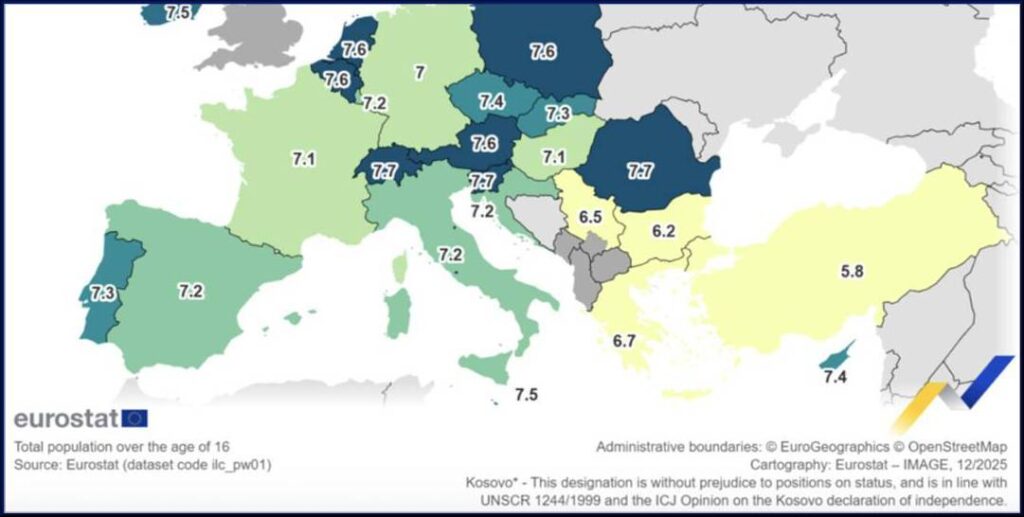
The level of satisfaction with quality of life is influenced by many factors, such as age, level of education, family situation and financial situation. However, Eurostat shows that life satisfaction is not evenly distributed and depends on a combination of socioeconomic factors, from age and education level to financial situation and family composition.
Age remains a relevant criterion. In most EU countries, satisfaction decreases with age. In 2024, people aged 25-64 and 65 and older reported similar levels of satisfaction, with smaller differences than in the younger age group (16-29). The largest differences between young and old were found in Croatia (2.6 points) and Lithuania (2.2 points).
In 11 EU member states (Slovakia, Poland, France, Belgium, Austria, Sweden, Ireland, Luxembourg, Finland, the Netherlands and Denmark), the middle age group (25-64 years) reported the lowest average level of life satisfaction. In Denmark, Finland and the Netherlands, people aged 65 and older reported the highest level of satisfaction with their quality of life.
Education remains one of the strongest predictors of satisfaction. At the European level as well as in Romania, satisfaction increases with the level of education. People with higher education reported scores ranging from 6.8 in Bulgaria to up to 8.4 in Romania – the highest level in the EU for this category. On the other hand, average satisfaction among people with less than a high school education ranged from 5.6 in Bulgaria to 7.7 in Finland.
Income and family composition also play an important role. People with higher incomes and those living in households with children report higher levels of life satisfaction. At the EU level, the difference between the highest and lowest incomes is more than one point (7.8 versus 6.6), also indicating the close relationship between financial stability and perceived quality of life.
The project that will put Romania on the map as one of the leading gas producers in Europe: “Neptun Deep” is getting underway off the coast of the Black Sea.
Romania prepares to become a regional leader in gas production: “Neptun Deep” starts off the Black Sea coast.
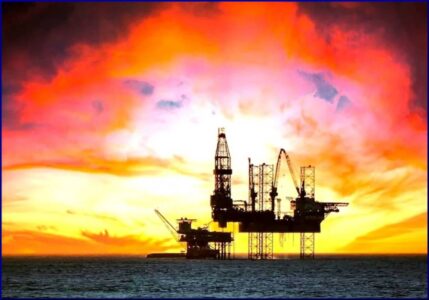
Romania is preparing to become a key player in the European natural gas industry with the official launch of the most ambitious energy project in the Black Sea: Neptun Deep . In just a few weeks, the largest drilling rig in the area will set sail and begin work on the first well. This marks an important step in the exploitation of a resource essential to the country’s energy security.
A strategic project for Romania’s energy independence.
The Neptun Deep project is Romania’s most important investment in offshore energy, with a budget of about 4 billion euros. First extraction is estimated to start in 2027 and annual natural gas production will be 8 billion cubic meters, out of the estimated 100 billion cubic meters available in subsea reservoirs.
This amount will exceed Romania’s domestic consumption needs, allowing the country to become a major supplier of natural gas in the region. Official estimates point to a total profit of 20 billion euros for the Romanian state during the exploitation of the field.
An impressive platform with an international team.
The rig will operate about 160 km off the coast, off the coast of Tuzla, and its crew will consist of 140 employees. Of these, only 20 are Romanians; the rest are part of an international team with 36 different nationalities.
Life on the platform will be designed to provide optimum comfort for the crew, as drilling operations are carried out 24 hours a day in 12-hour shifts. In addition to the necessary work facilities, the platform will have 140 individual cabins, a cinema, a gym and a music room, providing a modern and well-equipped living environment for employees.
Pierre Gully, the platform manager, stressed the importance of a strong team spirit:
“We depend on each other for daily tasks. We take care of each other. We get together to play video games, we watch movies, some of us are fitter than others and go to the gym.”Svein Jonassen, the drill station supervisor, added:
“Life is very good, we have good food, our clothes are washed, we are treated well. It’s a very nice place to be.”
Final preparations before the platform leaves for the open sea.
Before the rig can actually start drilling, final preparations are being made. Cristian Hubati, director of exploration and production, explains the process:
“Everything has been dismantled here, the platform has been taken down and now we are rebuilding it. That’s why it’s taking so long. Because the equipment works under very high pressure, it has to be re-certified and checked so we can make sure there are no incidents and no interruptions during the drilling period.”
Natural gas Black Sea
A giant step for the Romanian gas industry.
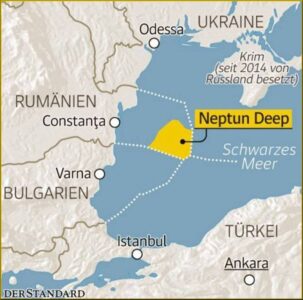 With the launch of the Neptun Deep project, Romania strengthens its position as one of the main natural gas producers in the European Union. In addition to the economic benefits, the project is also a strategic step toward energy independence, in a geopolitical context where natural gas resources are more valuable than ever.
With the start of operation in 2027, Romania will not only be able to meet its own energy consumption, but also to become an important supplier to neighboring countries, strengthening its role as a key player in Eastern Europe’s energy security.
This takes into account that the maximum width of the exclusive economic zone, in accordance with the provisions of the UN Convention on the Law of the Sea, ratified by Romania by Law No. 110/1996, may be 200 nautical miles
Financial Sector
The Bucharest Stock Exchange closed Monday’s trading session with gains on almost all indices, with turnover of nearly 170 million lei.
The Bucharest Stock Exchange (BVB) closed Monday’s Jan. 12 trading session with an increase of more than 2% on almost all indices, with a total turnover of 169.63 million lei (33.33 million euros), up from the value recorded in the previous session of 133.34 million lei (26.20 million euros).
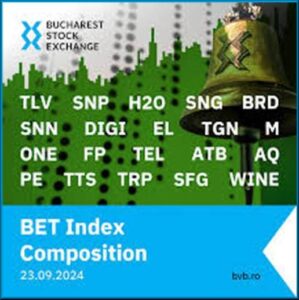 The Bucharest Stock Exchange’s main index, the BET, which includes the 20 most traded companies on the regulated market, rose 2.38% to 26,343.09 points, while BET-Plus, which reflects the development of the 43 most liquid stocks on the exchange, closed with a 2.32% increase.
The BET-BK index, the measure of mutual fund performance, closed 2.42% higher, while the BET-NG, which measures the performance of 10 energy and utility companies, rose 2.20%.
The expanded blue-chip BET-XT index, of the 25 most liquid stocks, was up 2.48%, and the SIF index, BET-FI, was up 2.73%.
The BET AeRO index, which includes 20 representative companies in the AeRO market, closed 0.02% higher.
The most liquid securities were those of Banca Transilvania, with transactions worth 30.06 million lei, followed by shares of OMV Petrom – 15.07 million lei, and those of Romgaz – 11.93 million lei.
Fishing industry
Kazakhstan strengthens fisheries sector
The Kazakhstan fishing sector processed nearly 59,400 tons of fish in the January-November 2025 period, contributing to a total market volume of 76,800 tons, up 10% from 2024. Fish catch was 38,500 tons, while aquaculture production was 20,900 tons, reflecting steady growth.
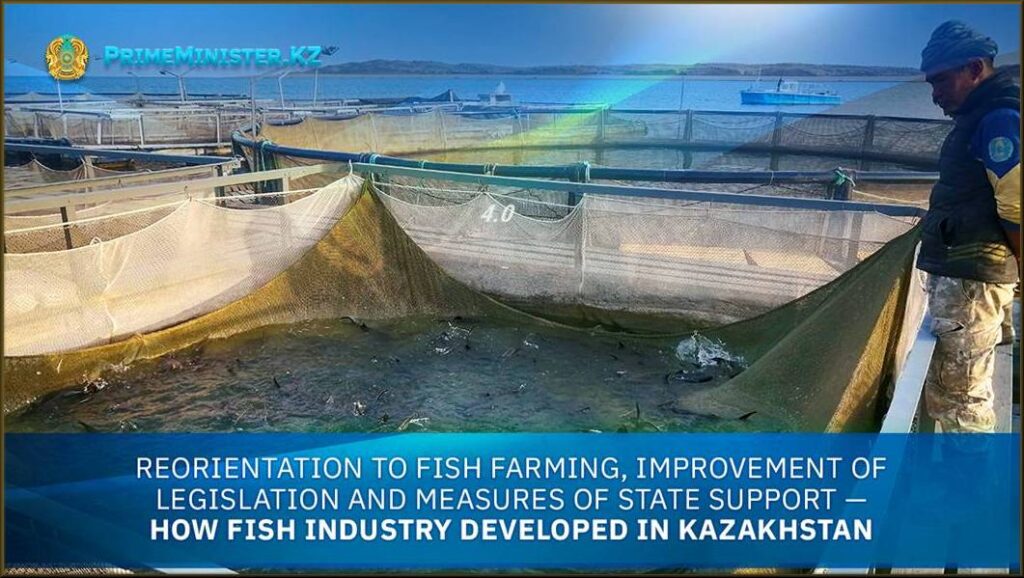
The country has 72 fish processing plants, 20 of which have export licenses to the European Union. Kazakh fish products are exported to countries such as Germany, the Netherlands, Russia and China. Government support measures, including a reduced VAT rate and low-interest loans, encourage production and processing. Sustainability remains a priority. The 108,600-hectare Caspian Seal Nature Reserve was established in 2024 to protect the species, and modernization of the sturgeon farm in Atyrau will increase juvenile production, the Agriculture Ministry reported on Jan. 8. Investments in the sector totaled 4.6 billion tenge ($9 million) in the first 11 months of 2025, and nearly 22 million juvenile fish of valuable species were produced under the state program. Growth, modernization and sustainability measures in the sector strengthen Kazakhstan’s position in domestic and foreign export markets.
As we mentioned in our December 2025 newsletter, Kazakhstan has entered into an economic partnership with Romania. So this partnership might be of interest to Oceanis in Bucharest which is a subsidiary of Dayseaday from Urk who in turn are members of the DRN and the DRN wants their members to do well.
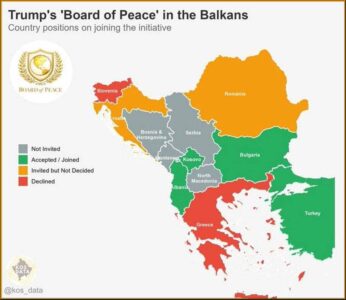
Trump’s invitation to Romania to Peace Council
“It is an invitation that honors us. The main goal is to stabilize the situation in Gaza. In a sense, it is an instrument proposed by the US for the implementation of a UN Security Council resolution. The way the first Charter of this body was drafted caused problems for 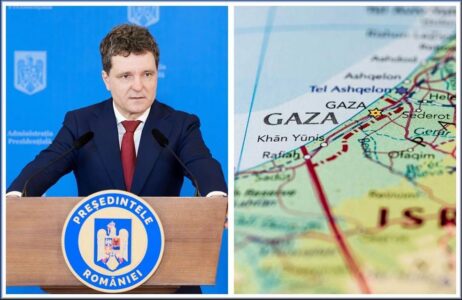 Romania and other states. As soon as we received it, we started to consult with each other. Now we have all started a process to revise this Charter so that it is consistent with other international treaties, and sometimes even with the constitutions of certain countries.
This process will take weeks, if not months.” “We feel honored. The US is our strategic partner and, of course, we want to be part of an organization that stabilizes the Middle East, or at least part of the region. On the other hand, we do not want to violate other international obligations, such as the UN Charter or the EU Treaty, for example.” “Romania is a medium-sized power. We, Romania, have a strategic security relationship with the U.S. and a predominantly economic relationship with the EU. We want the transatlantic relationship to be as harmonious as possible. There have been some shocks in recent years, but they have not broken the relationship. Right now things are going well and I am optimistic about the future because this relationship has been built over time, there are trade relations, there is technology transfer. It is difficult to break this relationship.” We agree to have a trade agreement with South America and India, so that our economies become much more competitive.” What do you think of the “two-speed Europe” proposed by the German finance minister? “I have read the statement very carefully; it is not as you describe it. There is no possibility of architectural change. One of the main concerns for the EU this year and next year is competitiveness. We, Europe, are behind the U.S. on this; we are losing ground in attracting investment, our gross domestic product has fallen to 75% of that of the U.S., and so we need to take a close look at our economy.
The six member states, the major economies, are proposing to coordinate so that at a Council, they align their positions and present a common position to the 27 member states.” “There are numerous other groups of countries working on the same goal, but on different issues. We are part of a group that aims to harmonize their positions on the pace of the green transition. We want to slow down this process, and we are meeting on Feb. 27 to align our positions so that we have a common negotiating position. There is a group on migration, and there are many other collaborations.”
 Surely there must be a way to make decisions faster and avoid vetoes? “This is a very complex debate because the veto is basically an expression of sovereignty. In foreign policy, there is a lot of reluctance to give up a country’s right to oppose a measure. In trade policy, member states have already granted this power to the European Commission.” Does Romania want a European army? “Until we reach that point, we have to compensate for the security deficit. Trump is right that Europe depended on the security provided by the US. The war in Ukraine prompted us, and European countries talking about it, to invest in security and defense.” When will President Nicușor Dan visit the U.S.? “Most likely this year, in March or April, we will see. The invitation is there. I want us to take it very seriously. I want this visit, in addition to the security aspect, to also have an economic content.” On foreign policy successes. “I believe that in foreign policy it is not the president’s job to appear in the international press. I believe that in foreign policy we have almost completely achieved our goals. We had to clear many hesitations, but never got definitive answers regarding France. Right now, our partnership with France is working well and there are no more historical problems. We have a very good partnership with Germany. We had a problem with Austria that could have taken us off course within the OECD. We have resolved that. In my opinion, in foreign policy we should regulate these bilateral issues so that we are a serious partner. In terms of laying the foundations, we have done a good job.”
Shipbuilding sector
Damen and PVE Equipment USA sign resale agreement for DOP submersible dredge pumps
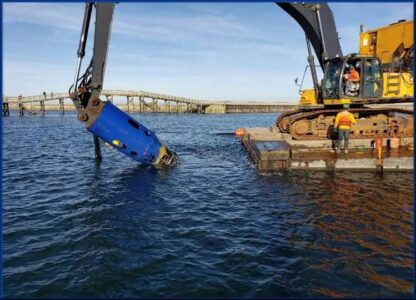 Damen Shipyards Group has announced a resale agreement with PVE Equipment USA (PVE USA), appointing PVE as an authorized partner and official supplier for the sale, service and parts supply of Damen’s DOP submersible dredge pumps in the United States.
Under the agreement, PVE USA will leverage its nationwide foundation, vibratory and pile equipment network to increase access to DOP pumps in the US. At the same time, PVE USA will provide local inventory and service, trained technicians and quick access to parts to minimize downtime for contractors in marine construction, port maintenance and environmental dredging. As part of the agreement, U.S. customers ordering through PVE will receive the same pricing structure as if they purchased directly from Damen.
The Bucharest Stock Exchange is running at full speed. How many active investors are there at BVB?
 The Romanian capital market is in a phase of accelerated volatility, Remus Vulpescu, general director of the Bucharest Stock Exchange (BVB), said Friday. He noted that the number of active investors on the BVB ended last year at 286,000.
This is more than five times more than in 2019. At the same time, the market has registered 335 listings so far since 2019, with a cumulative value of about 22.6 billion euros. These figures clearly show that the capital market is becoming increasingly important for both investors and companies, as a financing and growth mechanism, and is already having a significant impact on macroeconomic development indicators at the national level,” Remus Vulpescu said at the event where Vektor’s results were presented by the Romanian Association for Investor Relations (ARIR).
 He added that in this context, the quality of communication between companies and investors is essential.
Remus Vulpescu stressed that the capital market is based on trust, and trust is built through transparency, consistency and open dialogue. Therefore, last Friday’s event, dedicated to the presentation of the results of the Vektor analysis conducted by the Romanian Investor Relations Association for the year 2025, is an important event for the entire capital market sector and even for the financial market in general.
“A solid investment profile goes beyond financial indicators or the product and service portfolio. Investors analyze the strategic vision in the business model and development ambitions. Equally important is the management team’s ability to implement the business strategy and manage risk in a realistic and transparent way, an increasingly important skill in the increasingly dynamic world around us. After listing, the relationship with investors becomes an ongoing process. Listed companies must ensure periodic and continuous communication with the market, through financial reporting and current reporting, whenever relevant events occur. European and national legislation sets  minimum transparency requirements, without limiting companies’ communications to only these obligations,” Remus Vulpescu said.
He further stated that as the market develops, investors become more informed and selective. They analyze not only financial results, but also the quality of communication, accessibility of information and the willingness of companies to engage in dialogue with the market. In this context, issuers on the Bucharest Stock Exchange should attach greater importance to continuous communication with investors and potential investors.
For his part, the chairman of the Financial Supervisory Authority (ASF), Alexandru Petrescu, argued that transparency is not an award given annually, but must be embedded in the institutional DNA of any entity, be it a state institution or a private company.
What can we expect from The Hague?
Embassies and consulates get more air time
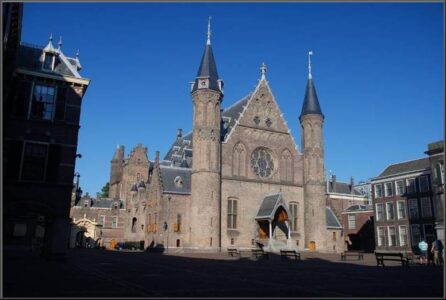 The Dutch embassies and consulates will get more breathing space, if it is up to D66, CDA and VVD. The current caretaker cabinet wanted to cut the costs of the postal network by 10%, but according to the new coalition, the permanent representations of the Netherlands abroad will receive an additional €35 million per year.D66, VVD and CDA want to “ensure that the Netherlands is fully and powerfully represented in important growth markets, in countries of high geopolitical importance and to provide support for the protection of human rights and democracy”.According to their election program, the Liberals actually wanted to cut back even more on the postal network. D66 and CDA, on the other hand, see more in investing abroad now that bleak geopolitical winds are blowing. It is still unclear whether the extra money means that posts in Brazil, Belgium, Cuba, South Sudan, Libya, Myanmar and Burundi will no longer have to be closed. This was a proposal made by the Schoof administration on Budget Day
Coalition takes action on livestock shrinkage
The coalition of D66, VVD and CDA is taking measures that should lead to less livestock being kept in the Netherlands. Animal and phosphate rights will also apply to calf and goat farms, to stop the growth of these sectors.
When selling a farm, farmers have to surrender part of their rights again anyway. In fact, the outgoing Schoof administration recently toned down this reduction measure.
By 2032, there must be a standard for the maximum number of cows per hectare of land, with exceptions for farmers who meet their individual emissions targets.
So it is not surprising that agrarians would go to Romania to check out the situation.
How much does one hectare of arable land cost in Romania and what is the average price in the EU? (Official Eurostat data)
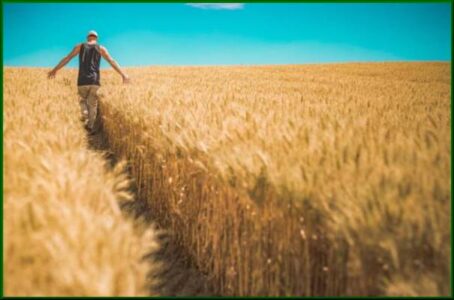 The average price of a hectare of arable land in the European Union in 2024 was 15,224 euros (up 6.1% from 2023), in Romania it was 8,700 euros, while the average annual rent for arable land or permanent pasture was 295 euros per hectare (up 6.4% from 2023), according to data published Wednesday by the European Statistical Office (Eurostat).
Disclaimer
The Dutch Romanian Network newsletter is compiled with great care. The Dutch Romanian Network cannot accept any liability for a possible inaccuracy and/or incompleteness of the information provided herein, nor can any rights be derived from the content of the newsletter. Articles do not necessarily reflect the views of the board.
All images and photos are taken from Pixabay, so are royalty-free.

