
Newsletter March 2026





DRN Newsletter -Extra Edition
As part of the Romanian Business Day on March 12, we are sending you this extra edition of the newsletter whose program and registration form you recently received.
We hope to see you there. Right away?
Then click this link: https://www.dutchromaniannetwork.nl/romanian-business-day-12-maart-2026/
Modernizing networks
Founded in 2007, the same applies to our organization and, with it, the services provided to its members. We will inform you about this in the coming months. We will also include our members who are already based in Romania.
Networks in 2026 works differently than in the past
 Networking has always been important for entrepreneurs, but in 2026, it works differently than it used to. Where piles of business cards used to be exchanged and contacts often remained superficial, modern business is about value, connection and tangible benefits.
 From business cards to value
Networking used to be mostly about meeting as many people as possible. Now it’s about quality over quantity. It is not about who you know, but who knows you. Also who can really help you and who you can learn from.
Delivering value and making relevant contacts creates long-term relationships that actually contribute to the growth of your business. It’s no longer about simply collecting contact information, but impactful connections.
Why connect deals
Business deals are not just a way to save money. They are also a connection between business owners. When you use a deal, you connect with other businesses, suppliers and professionals who have similar interests.
These “deal-based connections” create a networking effect: you save money while building relationships with people who can inspire you, advise you or offer collaborations.
Entrepreneurs helping entrepreneurs
Our principle is simple: entrepreneurs help each other by sharing knowledge, experiences and opportunities.
Whoever claims deals, benefits directly financially and unconsciously builds a network of companies and partners who actively contribute ideas and add value. This way networking works automatically while you are busy doing business.
Automatic networking is joining a networking organization such as the Dutch Romanian Network.
In short, from entrepreneurs for entrepreneurs.
As you know, we regularly organize networking meetings and inform you monthly about the opportunities Romania offers you. Besides, we often see that mutual contacts are established through our website. In short, for the small fee to our organization, you create an added value that far exceeds the fee.
- Discover new partners, suppliers or services relevant to your business
- Expand your network without extra time or effort
- This is how you combine efficiency, cost savings and networking in one platform
- Expand your network without extra time or effort
Financial-Economic Developments
Romania’s implementation of the consolidated budget for January 2026……..
Romania’s implementation of the consolidated budget for January 2026 resulted in a surplus of 0.85 billion lei, or 0.04% of GDP, compared to a deficit of 11.01 billion lei, or 0.58% of GDP, for January 2025. This is the first time in the past seven years that there has been a budget surplus in January; the previous time was in 2019. This development reflects fiscal consolidation based on better collection and strict management of public spending, according to the Ministry of Finance.
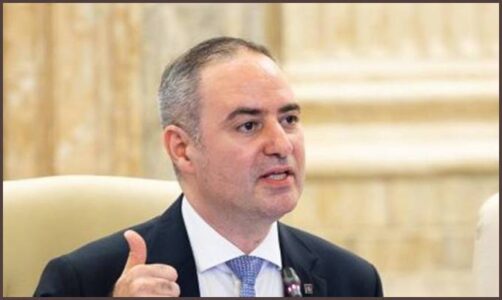 “The results of the first month of the year confirm the effectiveness of the measures to broaden the tax base and financial discipline. It is essential that we were able to increase revenues by almost 18%, while keeping current expenditures under strict control.
However, these January figures must be interpreted with caution and responsibility, and financial and fiscal discipline must be maintained throughout the year, including up to and including the 2026 budget, which we will soon finalize. Our priority remains the efficient management of public finances and ensuring sources of growth for the economy, both through the implementation of the recovery program and the financing of investments from European funds and the PNRR, which are the engine of sustainable growth of the Romanian economy “, said Finance Minister Alexandru Nazare.
-
Income from the general consolidated budget
Total revenue in January 2026 was 55.12 billion lei, up 17.9% from last year. Expressed as a percentage of GDP, total revenues increased 0.25 percentage points, of which 0.22 percentage points came from current revenues, mainly payroll and income taxes, and VAT.
Payroll and income tax revenues totaled 9.02 billion lei, an increase of 31.4%. This increase was mainly caused by the significant 59.7% increase in dividend tax revenues due to concentrated distributions in December 2025, under legislative changes. At the same time, payroll tax revenues increased by 13.7%, which was higher than the growth of the payroll fund in the economy. This trend was influenced in part by the elimination of tax breaks for workers in construction, agriculture, food and IT.
Health insurance premiums amounted to 18.46 billion lei, up 8.2%, reflecting the expansion of the tax base established by Law No. 141/2025.
Net VAT receipts reached 13.06 billion lei, a nominal increase of 2.52 billion lei, 23.9% higher than in January 2025. This momentum was supported by changes in VAT rates, while refunds totaled 4.73 billion lei. Timely processing of VAT refunds is a priority that directly supports business liquidity and ensures the predictability of companies’ financial flows.
Excise revenues were 3.67 billion lei, up 7%, helped by revenues from energy and tobacco products.
Non-tax revenues amounted to 5.21 billion lei, up 28.2%, including revenues from the sale of greenhouse gas emission allowances. Amounts refunded by the EU came to 2.28 billion lei, a significant increase of 33.9% from 2025.
-
General consolidated budget expenditures
Total spending was 54.27 billion lei in January 2026, down 6% from the same period last year. As a percentage of GDP, they fell from 3% to 2.7%.
Personnel costs were 13.54 billion lei, down 0.47 billion lei from January 2025, due to the reduction of some bonuses and pay restraint measures. However, their share in GDP remained 0.7%.
Spending on goods and services fell 11.8% to 6.51 billion lei, and interest expenses fell 7.9%. Spending on social assistance amounted to 22.74 billion lei, an increase of 2%, taking into account the measures of Law No. 141/2025.
Investment expenditures amounted to 3.62 billion lei. Of this, 72.22% represents the value of payments for projects financed with non-refundable external funds under the PNRR 2021-2027 program, as well as amounts related to the grant and loan components of the PNRR.
Edit: A long story, but good posts can’t be long enough.
Transportation and Logistics Sector
Romanian logistics market is developing rapidly
The Romanian logistics market is developing rapidly, reflecting dynamic shifts in freight transportation, delivery services and industrial real estate. Many investors expect Romania to become a logistics hub for the reconstruction of Ukraine. Therefore, logistics centers, warehouses and highways are also being built in the Moldova region. In particular, the port of Constanța has become a crucial strategic player in the region, especially since the outbreak of war in Ukraine.
The logistics market in Romania is growing rapidly, driven by its strategic location between Europe and Asia, low labor costs and a strong e-commerce sector. Bucharest, Cluj-Napoca and Timișoara are key hubs. The market, estimated to be worth $21.11 billion by 2025 and growing to $24.27 billion by 2030, sees opportunities in proximity to Ukraine’s reconstruction
KLG Europe and Summa: building tomorrow’s logistics professionals together
In the world of logistics, one thing is considered indispensable: cooperation. KLG Europe and Summa have shown for years that when education and business know how to find each other, something special can be created. What once started with guest lectures and job fairs has grown into a close strategic collaboration that goes beyond words alone.
 From idea to reality
The initiative for the Logistics Trade School in De Kempen is a striking example. The idea was born during a discussion around the table – and within a few weeks it was transformed into concrete plans. This decisiveness typifies both parties: approachable in communication, enterprising and organizing, and always focused on results.
More than a partner
KLG Europe is not only an employer, but also a connector. As an initiator in bringing the business community together, the company knows how important it is to introduce young talent to practice at an early stage. From Eindhoven, Summa students travel annually to Venlo to participate in Beleef de Logistieke Keten, an event where KLG Europe acts as a co-creator. In addition, students get access to events such as the Brabant Seek Talents Festival on Oct. 28, where they can further develop and showcase their talents.
Stronger together, moving forward together
The collaboration is built on a shared vision: investing in “the people of today and the world of tomorrow.” By bringing education and practice close together, students are prepared not only for their future jobs, but also for their role in a rapidly changing world.
A partnership with a future
With the Vakschool Logistiek De Kempen, KLG Europe and Summa , together with participating partners, are taking a solid step into the future. It is a school that not only educates, but inspires. Where knowledge is shared, experience is gained and where every student gets the chance to grow. Because in logistics – as in life – you are stronger together.
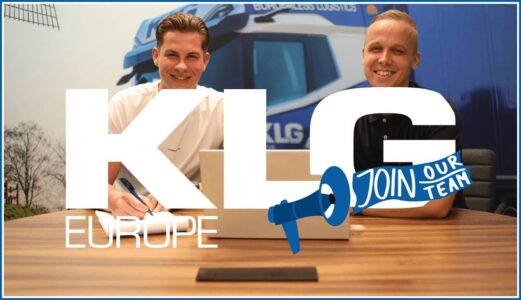
KLG Europe – working at and for the future
The logistics sector is in full swing. We notice this not only in the innovations and international opportunities, but also in the challenges. One of these is the increasing dropout rate among students in logistics colleges. As KLG Europe, we take our responsibility in this. We believe in the power of young talent and are actively committed to enthusing them for a career in logistics.
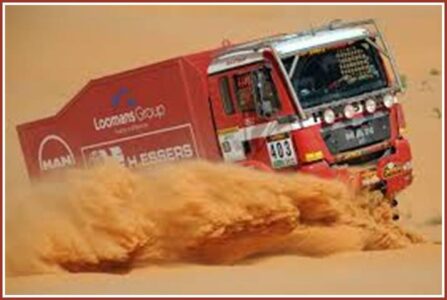
 H.Essers takes on every challenge, as this year 82-year-old Noël Essers is taking part in the Africa Eco Race.
He thus gives substance to the challenging slogan of this special transportation company in a special way!!!
Logistics infrastructure sector
Romanian government announces takeover……..
The Romanian government announces the acquisition of the operator of the international free port of Giurgiulesti by the Maritime Ports Administration of Constanța, in a transaction supported by the EBRD that will have a major regional impact.
“The Romanian government welcomes the completion of the transaction by the European Bank for Restructuring and Development (EBRD) for this acquisition of the operator of the international free port of Giurgiulesti, the company ICS Danube Logistics, by the National Enterprise Maritime Ports Administration SA Constanța. On December 31, 2025, the EBRD signed the agreement for the purchase of all shares in ICS Danube Logistics, the operator of the port of Giurgiulesti, to the National Enterprise Maritime Ports Administration SA Constanța,” the government said.
The transaction was approved by shareholders of the Port of Constanta on Feb. 12, 2026.
“Through this purchase, Romania, through CN Maritime Ports Administration SA Constanţa, commits itself to the long-term development of the international port of Giurgiulesti and to strengthening its position in the Black Sea region and the Danube basin,” the government said.
Through this acquisition, Romania assumes the long-term development of the international port of Giurgiulesti, with the aim of:
Increasing operational capacity;
Modernizing port infrastructure;
Strengthening its strategic role in the Black Sea region and the Danube Basin.
The investment also aims to strengthen the Port of Constanta’s position as a regional transport and logistics hub and facilitate connections between the European Union and neighboring regions in the current geopolitical context,” the press release said.
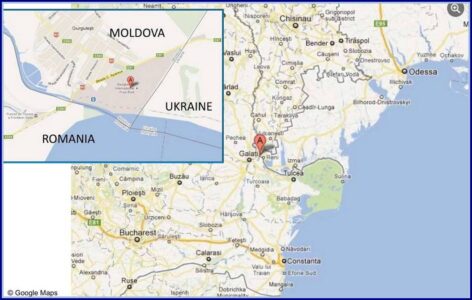 The acquisition of the port operator provides new commercial opportunities for companies in Romania and Moldova, including support for the future reconstruction of Ukraine. At the same time, the transaction strengthens the strategic partnership between the two countries and stimulates bilateral economic exchange.
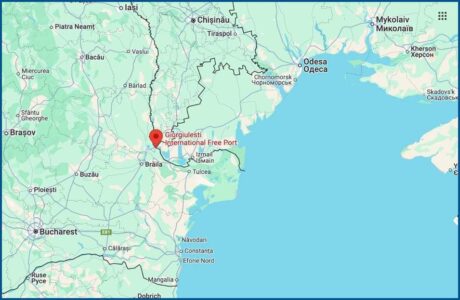
The international port of Giurgiulesti handles more than 70% of Moldova’s imports and exports by water, making it an essential logistics hub. Located at the mouth of the Danube River, close to the borders with Romania and Ukraine, the port features an oil terminal, grain terminals, general cargo facilities and a business park.
The international port of Giurgiulesti, located at the mouth of the Danube, just a few kilometers from the Romanian border and close to the Ukrainian border, can receive both river and sea vessels
 The national company Maritime Ports Administration SA Constanţa submitted the first bid in the auction organized by the European Bank for Restructuring and Development (EBRD), the majority shareholder of ICS Danube Logistics, on April 24, 2025.
 In a move that will reform regional logistics and deepen cross-border economic cooperation, Romania will take over Moldova’s only Danube port, Giurgiulesti, it was announced Friday.
The European Bank for Restructuring and Development (EBRD) has announced that it will sell Danube Logistics, the operator of the international free port of Giurgiulesti, to the Romanian state port of Constanța.
 Financial details of the transaction have not been made public. However, Romanian and Moldovan media reported last year that the deal could be worth about 60 million euros.
EBRD said the sale follows “an extensive global tender process for mergers and acquisitions” with the aim of finding a long-term strategic investor capable of further developing the port and strengthening Moldova’s integration into regional and global trade networks.
Giurgiulesti is located about 130 kilometers from the Black Sea, near Moldova’s borders with Romania and Ukraine. The port provides landlocked Moldova with direct access to the Danube River and, through it, to Western European markets. In addition, the port has become an important logistical gateway for trade flows to and from Central Asia.
The deal comes amid growing concerns about vulnerabilities in supply chains in Eastern Europe, exacerbated by ongoing geopolitical tensions.
After the Russian blockade of Ukraine’s Black Sea ports in 2022, Giurgiulesti played a crucial role in facilitating the movement of goods to and from Ukraine. In the following years, the port handled record volumes of cargo, between 1.8 and 2 million tons per year.
Analysts say that by securing control of Giurgiulesti, Romania aims to strengthen a more resilient regional trade route, reduce dependence on conflict-affected routes and consolidate its position as a strategic logistics hub in Central and Eastern Europe.
Agricultural sector
Netherlands and Moldova strengthen cooperation
 Minister of Agriculture, Fisheries, Food Security and Nature, Femke Wiersma (until Feb. 23, 2026), and Moldovan Minister of Agriculture and Food Industry, Ludmila Catlabuga, jointly launched enhanced bilateral cooperation with the signing of a
 Memorandum of Understanding (MoU) in the field of climate-smart agriculture and sustainable food systems. This took place during the Global Forum for Food and Agriculture (GFFA) in Berlin.
The cooperation is aimed at strengthening the Moldovan horticultural and dairy chain and explicitly focuses on a triple helix approach: companies, knowledge and educational institutions as well as government authorities work together on innovation, application and scaling up. By joining forces, climate-proof, economically profitable and future-proof food production systems can be successfully applied in Moldova.
Dutch companies, knowledge institutions and organizations can contribute with their expertise, technology and partnerships to climate-resilient food production systems in Moldova. Are you interested in participating?
You can reach us at: c.m.vandeweijgaert@minlnv.nl and bkr-lvvn@minbuza.nl.
Focus on climate-resilient horticulture and a future-proof dairy chain
Agricover Holding has increase activities.
Agricover is a leading distributor of agricultural supplies and owner of an IFN (Institute for Finance) for financing farmers.
They closed 2025 with an increase in the volume of loans granted. This increase in financing takes place in a context where farmers are experiencing increasing difficulties, after several years of drought and against the backdrop of an unfavorable geopolitical environment. This kept grain prices low, despite lower Romanian agricultural production, at least for corn.

 “We have had a good year, a year of growth for our company. We focus on primary agricultural production, mainly large crops, and our main business activities are related to agricultural finance and crop distribution. (…)
We ended the year with a balance of 3.8 billion lei in loans provided to agriculture, up 14% from the previous year. We also increased our sales in the distribution of inputs, seeds and pesticides.
We are the largest distributor and achieved a turnover of almost 900 million lei. We also have another branch, the distribution of fertilizer and diesel, with lower margins, which generated an almost equal turnover,” said Liviu Dobre, CEO of Agricover Holding, during the business show ZF Live. Founded in 2000 by Jabbar Kanani, the group is one of the best-known companies in the agricultural sector.
Romanian horticulture sector
We hereby announce the launch of a new report on Romania’s horticultural sector
We hereby announce the launch of a new report on Romania’s horticultural sector, with a strong focus on greenhouses. The report was commissioned by the LAN Bucharest office and written for Verde AG and provides a valuable picture of the status, developments, challenges and opportunities in this sector in Romania.
Key findings
The horticultural sector in Romania is currently developing rapidly and offers good prospects for cooperation at B2B, K2B and K2K levels.
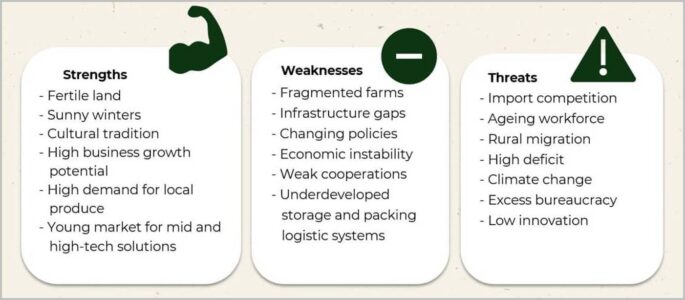
Romania has fertile soil, a favorable climate and high winter solar radiation, which supports productive, year-round cultivation in greenhouses and a variety of outdoor crops. Low land and labor costs, along with strong domestic demand and strategic access to European markets, further strengthen the sector’s positive outlook.
The Romanian agricultural sector suffers from an incomplete transportation and logistics infrastructure, as well as highly fragmented small businesses that hinder investment and economies of scale.
Unstable regulations and frequent legislative changes are disadvantages, while inefficiencies – including inadequate cold storage, packaging and poor coordination between growers, processors and authorities – limit progress and competitiveness.

Romania is well positioned to leverage EU funding and knowledge transfer to modernize production, apply innovative climate technologies and expand value-added product processing facilities. There is significant room for growth for both domestic and export markets, diversification of the crop portfolio, and introduction of advanced value-added product processing facilities and logistics solutions.
Threats include intense competition from imports, particularly from Turkey, which continue to depress prices and put pressure on local profitability. The sector faces demographic challenges: an aging farming population, rural depopulation and a shortage of qualified agricultural personnel. In addition, macroeconomic volatility and bureaucratic burdens can dampen the enthusiasm of both domestic and foreign investors. Low adoption of research and innovation further jeopardizes future adaptability and competitiveness.
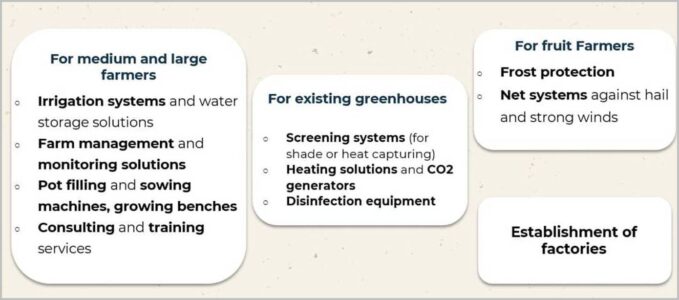
Opportunities lie mainly in the areas of turnkey greenhouses and green energy.
But the sector also offers other opportunities:
Agri and Food sector
DN Agrar Group, the largest producer of cow’s milk in Europe
DN Agrar Group, the largest producer of cow’s milk in Europe and one of the leading integrated agri-food companies in Romania, estimates that the average milk price in 2026 will remain lower than in 2025.
 According to the producer, a downward trend in the average milk price can already be observed in the first half of 2026. In line with trends and expectations in the European market, DN AGRAR expects a gradual stabilization in the second half of the year.
“At the group level, the impact is expected to be partially mitigated by the strength of the integrated business model and the expansion of value-added activities. While short-term volatility may persist, the medium- and long-term outlook for the company remains positive, supported by structural demand and continued strategic investments,” the company added.
For 2025, DN AGRAR reported preliminary revenue of 213 million lei, up 21% from 2024. Net profit rose 65% to 52 million lei, with a solid net profit margin of 25%.
“2025 was a pivotal year for DN AGRAR, characterized by strategic growth and consolidation supported by solid operational execution.
We delivered more than 70 million liters of milk, a 13% increase over the previous year, and financial performance was supported by both higher volumes and favorable milk price trends. Through the 2025-2030 development strategy announced in May, we are pursuing and implementing a clear set of priorities: expanding core dairy activities, strengthening vertical integration and diversifying into segments with higher added value and sustainable growth potential. During the year, we further developed the Straja farm project, expanded composting activities, strengthened cooperation with BSOG Energy for biomethane production and announced the investment in a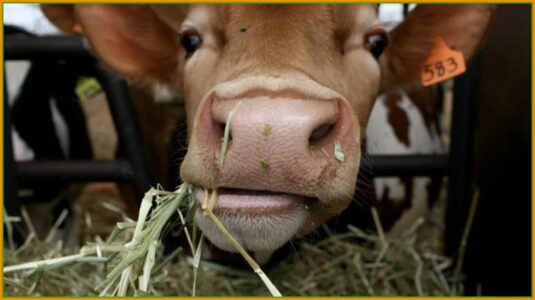 milk processing plant, aimed at improving margins and strengthening the regional position. All these initiatives support DN AGRAR’s transformation from a leader in dairy production to an integrated agri-food platform. By consolidating the management structure and establishing a clear timetable for listing on the main market of the Bucharest Stock Exchange, we are building a more scalable, resilient and future-proof organization focused on “Sustainable growth in the long term,” said Peter de Boer, CEO of DN AGRAR Group:
Producer operating income reached 335 million lei, up 27%, thanks to a 13% increase in milk production and a favorable trend in the average selling price of milk.
Operating expenses amounted to 263 million lei, up 20%, as a result of livestock expansion, higher energy and personnel costs and input price increases.
EBITDA reached 97 million lei, up 37%, resulting in an EBITDA margin of over 45%. In 2025, the company invested 52 million lei.
The group operates an integrated business model based on dairy production, arable farming, organic composting and green energy. With five large farms and a herd of more than 18,000 animals, the company supplies more than 70 million liters of milk annually, with the goal of doubling production to 150-200 million liters per year by 2030. DN AGRAR manages more than 10,000 hectares of agricultural land and two composting plants with a capacity of  14,000 tons of organic fertilizer per year, with ambitions to expand this to 40,000 tons by 2030. The group has tripled its turnover in just three years since listing and aims to double EBITDA by 2030, while also striving for carbon-neutral milk production.
DN AGRAR’s 2030 strategy integrates doubling milk production capacity with expansion into complementary farm segments. These include vertical wheatgrass farms, which should provide 25% of current feed requirements, biomethane production in cooperation with partners, industrial greenhouses and the expansion of composting infrastructure.
The DN AGRAR Group was founded in 2008 as a family business by Jan Gijsbertus de Boer and operates in the provinces of Alba, Sibiu and Hunedoara.
Sector Artificial Intelligence and IT Infrastructure
Romanian companies prioritize investments……
Romanian companies prioritize investment in basic IT systems and less in AI solutions – Revolut survey
 A survey by Revolut Business among 150 business decision-makers in Romania (CEOs, CFOs and COOs) shows that artificial intelligence (AI) is not yet a priority in Romanian companies’ budgets. In 2026, they prefer to invest in modernizing their IT infrastructure and automating outdated systems, instead of accelerating the implementation of AI.
When asked where the biggest budget increase will go this year, “IT infrastructure modernization and Cloud migration” ranks first (19%). This is followed by investments in sales and marketing to increase market share (16%) and recruiting new talent to expand the team (12%).
Although it is a hot topic in global business, “developing artificial intelligence” surprisingly ranks sixth with 11%. So Romanian companies seem to want to fix the past first and only then look to the future and go along with the trend of artificial intelligence.
When companies want to adopt AI, the technology itself is rarely the problem. Only 15% of executives surveyed see IT infrastructure as the biggest obstacle to implementing AI.
The real obstacles are human in nature: management commitment to a clear AI strategy (31%) and programs for change management among employees (21%). A quarter of companies surveyed struggle with internal acceptance, while one in five midsize companies believe they lack the necessary technical expertise.
Manual labor and bureaucracy are major obstacles.
That the basics are not yet solid is also reflected in the frustrations cited by respondents. When asked which process is most outdated and needs immediate replacement, a quarter of respondents (24%) said it was “manual data entry and reporting.” Lengthy HR onboarding processes (22%) are also a significant obstacle, especially for smaller companies (32%).
Although the overall trend points to consolidation, the survey reveals an interesting discrepancy between the different members of the steering committees.
CEOs want to retain talent: CEOs prefer to invest in security. For them, “retaining talent” is a much higher priority (15%) than for the CFO (5%).
CFOs want to innovate: CFOs are more open to investing in innovation than CEOs (23% vs. 13%).
This situation exposes a strategic dilemma: the CFO seeks expansion and innovation, while the CEO prioritizes internal stability and employee retention in an overheated job market.
 “Romanian companies are really pragmatic: you don’t build skyscrapers on a weak foundation. But modernization doesn’t have to mean wasting years on IT projects. Many of the frustrations with “outdated ways of working” emerge in the survey. Time-consuming administration and unnecessarily complex approval procedures can be solved directly with today’s generation of smart financial tools.
By choosing solutions that automate this ‘manual work,’ you narrow the gap between the CEO’s and CFO’s desires. With Revolut Business’ tools, operational efficiency becomes a reality, enabling the transition from manual and cumbersome administration to direct, automated and financially compliant payments,” said Iulian Boia, Sales Manager of Revolut Business in Romania.
In the future, manure production might become more important as milk production
“In the future, manure production may well become more important as milk production”
said Peter de Boer of DN AGRAR Group S.A. based in the Romanian town of Garbova(District Alba)Now it appears that Frisian dairy farmer Jelle Heida from Wijnjewoude, in consultation with Friesland Campina, has a manure fermentation installation that reduces nitrogen emissions as well as greenhouse gas.The methane released is captured and processed into green gas, a substitute for natural gas.
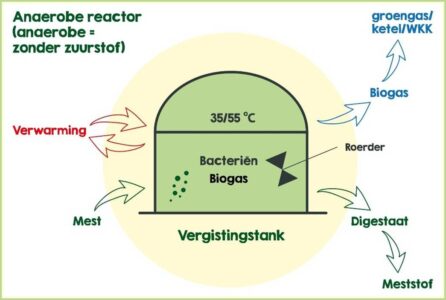 The residual nitrogen counts as a fertilizer substitute, also known by the technical term renure (recovered nitrogen from manure). The European Union recently gave the green light for the use of such fertilizers. Dairy farmers around Wijnjewoude hope to spread the nitrogen-rich stuff over their pastures as soon as possible.
As early as 2016, Friesland Campina wanted to install 1,000 manure digesters at affiliated dairy farmers within four years. That was far from being achieved. As of 2026, only 87 have been realized, according to the Government Service for Entrepreneurs (RVO).
Money the mire of the earth
This should not include the medicinal mud baths that are everywhere in Romania.
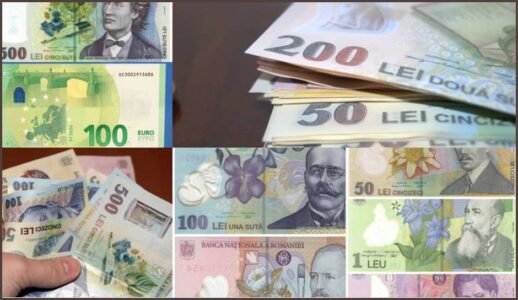
How the Romanian currency got the name “leu”. Originally, it would have been called “Romanian.” Today, collectors and others can take a journey through time in the capital and discover the history of the Romanian leu. From the first coins issued in medieval states to today’s polymer banknotes, they are all on display at the National Bank Museum.

The story of the lion is told through more than 500 objects. The biggest attraction is the machines that were used in the production of coins. – I will show you how money used to be minted. It was literally minted. And now we can see that the coin was printed on both sides. 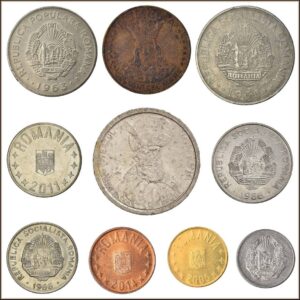 Visitors also learn how to count coins: Coins of 10 bani are placed in the hopper, then the machine counts the coins. This money is put back into the tub and the machine rolls it into pieces.
  Another attraction is the gold room. – We display four gold bars and several gold coins, a collection with a total value of about 5 million euros. All tours are guided, allowing the public to discover lesser-known stories. One is the origin of the name “lion.” – The currency was originally supposed to be called “Romanian.” The idea was that the French had the franc and we had the Romanian. But the Romanian leu was legally introduced in 1867. And the name came from a thaler-like coin, a coin from the Netherlands, called “Leuven Taler,” so leu thaler. (Pictured above) Also on display are the first Romanian coins, minted in 1868, after the enthronement of King Carol. They were made at the Birmingham mint. Next to them are the first paper banknotes, printed in 1877, with elements inspired by the works of Grigorescu. In 1999, the year of the solar eclipse visible in Romania, the first polymer banknote appeared, the 2,000 lei, which is still highly sought after by collectors to this day. Also on display is a 13-kilogram gold bar, which visitors are encouraged to try to lift.
OMV Petrom makes an announcement on energy prices, liberalization and gas extraction in the Black Sea.
Energy consumption in Romania will increase in the long term and I believe that the possibility of concluding long-term contracts on the local energy market will ensure security of supply and provide a better price, OMV Petrom CEO Christina Verchere said Monday. According to the OMV Petrom top woman, it is up to the government to set prices, but the company supports free market principles.
“The (Neptun Deep, no) project is going well. We have now drilled the first four wells at Pelican and moved the platform to Domino. So these are the two fields we are developing for Neptun, so it is very important. The platform has arrived there and will drill six wells. (…) It is a very international project, but everything will come to the Black Sea. It will be a very, very intense period for us here in Romania,” Verchere said during the event “ZF Power Summit 2026: Energize the economy.”
“Gas delivery is scheduled for 2027, next year. The European market has a consumption of about 350 billion cubic meters per year, in our region it is 25 to 30 billion cubic meters per year, and Neptun Deep will produce 8 billion cubic meters per year. (…) Currently, 50% of our gas in Europe comes in the form of LNG (liquefied natural gas), and that now determines the price, also known as TTF (Title Transfer Facility – the reference price for natural gas traded in Europe). I am not an expert on LNG prices , but if you look at all the analysis, there is an expected decline in LNG prices. Our long-term analysis shows that we will see a continued increase in energy consumption in Romania,” said the head of OMV Petrom.
We believe in the free market.
“It is the power of the government to do what it wants with prices. In general, we believe in the free market. So we will always want a free market that allows us to make the right investments and invest for the long term. As you know, the investment in Neptun Deep is four billion euros. You have to have a vision of what the market will look like.

I really believe, and we saw this until 2022, that you need a mechanism to protect your most vulnerable customers. I think we’re starting to see that now, with the deregulation of the energy market, but this needs to be really robust, because prices will go up and down and you need to be able to control this for your most vulnerable group, without the economy necessarily paying for everyone, because not everyone needs this basically,” Christina Verchere stressed .
According to the specialist, there are many factors that work well in the Romanian energy market, but concluding long-term contracts can guarantee gas supply security and provide a better price.
 “I think a lot is going well (on the Romanian energy market,). If I had to mention one more thing, it would be the possibility to enter into longer-term contracts, something relatively new to the Romanian market. If you are talking about longer terms, more than 12 months, in most markets you see the possibility of concluding a longer-term contract, because it guarantees security of supply. It also offers a better price. I think this is a natural development for the Romanian market, to go in that direction as far as gas is concerned. What we are seeing and what is happening is not necessarily unique to Romania, but the energy transition is not a simple thing that we are trying to achieve here. That leads to more storage. I think storage is really important to ensure security during different periods of the year. The seasonality of gas is not unique to Romania. It’s all over Europe, all over the northern hemisphere. Now you can store gas in other countries, not necessarily only in your own country. You can insure it, but you pay a fee every time you cross the border.” “So the most economical option is to be able to store, but I have to say that storage costs in Romania are very high,” Verchere said.
How much does it cost the Dutch at Mega Image to put Romanian vegetables on the shelves?
Last year’s price increases were record high.
The Romanian “Flavors of Homeowners” program of Mega Image, the supermarket chain of the Dutch-Belgian group Ahold Delhaize, generated sales increases of up to 45% for certain products last year. However, the annual costs run into millions of euros.
Mega Image, the supermarket chain of the Dutch-Belgian group Ahold Delhaize, has now been working with 350 local producers since the launch of the Romanian “Flavors of Households” program. This is according to data from the company analyzed by Economica.
They offered 29 types of fresh fruits and vegetables and achieved record sales in 2025. Last year, for example, local farmers delivered a record 3,000 tons of tomatoes to Mega Image through this program, resulting in record sales of about 45% more than the previous year.
Investments of 3.3 million euros
According to the company, 3.3 million euros have been invested in the development of the program over the past two years alone. This is because the retailer provides producers with the necessary growing materials, including seeds and fertilizers, as well as technologies for biological control of pests and diseases.
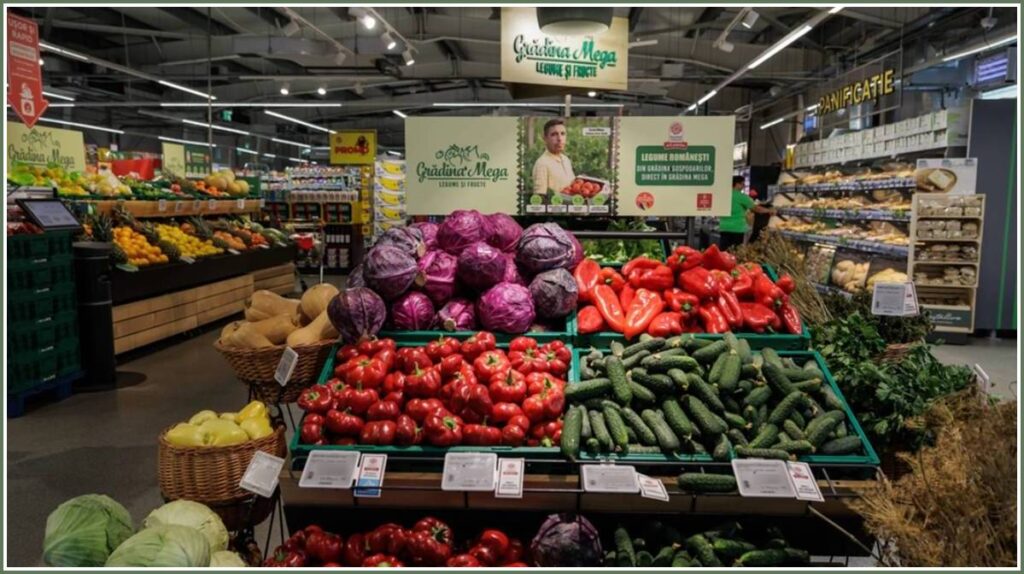
Mega Image also helps local producers conduct soil, water and residue analyses and obtain certification in accordance with local laws and Mega Image policies.
The retailer also employs horticultural engineers who work directly with growers to improve soil and water use efficiency and reduce pesticide and fertilizer use.
Mega Image, founded in 1995, is one of the largest supermarket chains in Romania, with a network that currently includes about 1,000 stores in Bucharest, Cluj-Napoca, Iași, Sibiu, Oradea, Constanța, Ploiești, Brașov, Târgoviște, Timișoara, Bacău, Focșani and other cities in the country, under the Mega Image and Shop&Go brands.
Shipbuilding sector
Damen shipyard in Galați sends its 1,400 employees on temporary leave until the end of 2026
According to local media, during technical unemployment, Damen Galati employees will receive benefits equal to 75% of their base salary and keep their other working conditions. The measure is already in effect and was taken in response to the decline in the order book. Current contracts are not affected by this measure, Damen representatives said. The reason for the aforementioned is the slow decision-making by the Romanian government!
For if one considers the urgent situation in the Black Sea, the aforementioned seems to raise questions.
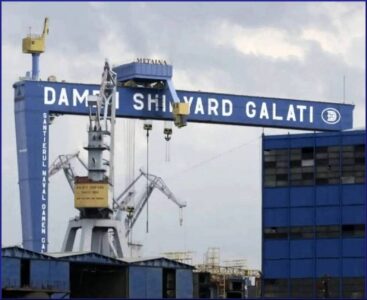 After all “the Damen Galați shipyard is the only shipyard in Romania that has built military ships for NATO countries after 1990. The design and construction capabilities of military ships in Galați allow Romania to produce on its own territory the most modern and complex military ships, with the guarantee of logistical support throughout their life cycle.”
In this context, Damen Shipyard Galați expresses its interest in maritime programs funded through SAFE, as a guarantee for the design and construction of ships in Romania , in accordance with SAFE requirements.
“We remain committed to a strong presence in Galați and want to maximize the skills of the local team in a constantly changing economic and industrial context,” said representatives of Damen Galați at the request of Pro Lider FM in Galați.
Damen Shipyard Galati
With an area of 55 hectares and about 1,500 employees, Damen Shipyard Galati is among the largest production sites within the Dutch Damen Group.
The Galati Shipyard was acquired by the Damen Group in 1999. Since then, Damen Galati Shipyard has delivered more than 500 vessels to customers around the world (including more than 30 military vessels built for 13 different countries, including NATO and EU member states).
The company’s portfolio includes patrol vessels, offshore vessels, ferries, dredgers and barges, superyachts, military vessels and tugs.
How the Romanian-designed “brain” for warships defending the Black Sea works
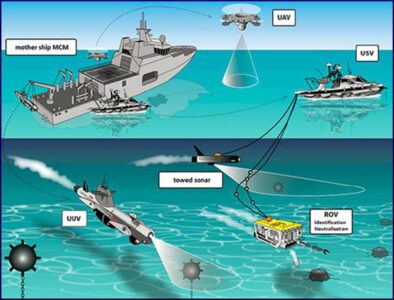 For four years, Romania has been responsible for averting the dangers created by Russia in the Black Sea: floating mines and military ships near crucial infrastructure. Right now, however, the allies cannot leave coastal protection to Romanian sailors because they have outdated ships that are no longer up to the task. A team from Digi24 traveled to the Netherlands to see what the technology of the future for warships looks like: systems that detect threats within seconds and can make the difference between life and death. Embed US security expert: Romania is the third most important country in NATO.
The Black Sea is more dangerous than ever. The war Russia has started has turned the waters off the Romanian coast into a battlefield and a hotbed of sabotage. War mines float around and Putin’s ships threaten crucial underwater infrastructure. Well protected, the Black Sea is a shield. Vulnerably, it becomes a gateway to Romania and Europe. For safe waters, high-performance ships remain the only solution. Hengelo, Netherlands, is home to one of the largest factories for computer systems for warships. In the space that mimics a control room, a unique, state-of-the-art system for ships is being tested. Alexandra Dinu, journalist at Digi24: The radars are the first to report that a ship is approaching. The data is transmitted to the “ship’s computer,” an advanced system. This system not only reports that a ship is approaching, but also determines whether it poses a threat or not. The system itself determines, depending on the speed, trajectory and behavior of the detected object, whether to respond with fire . This could be a drone, a missile or an aircraft. Data is displayed on the screen within seconds. On older ships, including those in the current Romanian fleet, the decision-making process takes a long time because the information is centralized manually. This means a lot of lost time, time that can be fatal.
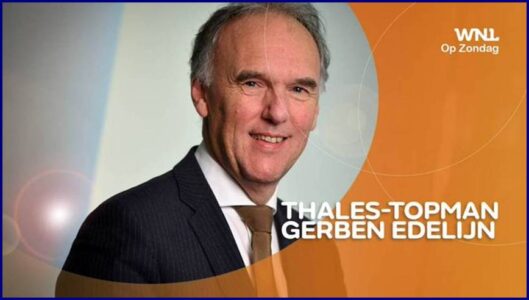 Gerben Edelijn, CEO: “It’s a battle management system that actually transforms a ship into a military vessel, into a warship. Reaction time is becoming increasingly important as threats in the military ship environment increase, especially with the rise of drone attacks and swarm attacks, where multiple targets come at you at the same time.” This TACTICOS system we want to see on ships in Romania CEO Thales : “I think it’s inevitable.” Half of this genius battleship design was made in Romania. Andrei and Octavian are two Romanians I met in Hengelo. They are part of a team of engineers working on maritime information systems. Andrei Luca, engineer: “It was my wish to follow in the footsteps of my father, who worked all his life in the Romanian Navy. That inspired me tremendously. I came across this company when I was still a student and applied for an internship. I wanted to discover more. It turned out to be a good match.” Octavian Cătușaru, engineer: “It’s very interesting. We deal with marine experts every day and you learn a lot of new things.
Every day represents a new challenge.” Gerben Edelijn, CEO : “If we compare the teams in Romania with those in the Netherlands, we see that they are at the same level.” Răzvan Opriș, manager of the naval department : “The Bucharest expertise center aims to train 1,800 engineers by 2030.” Naval and land-based radar systems are also produced in the Netherlands. Alexandra Dinu, journalist at Digi24: “The radar behind me is extremely effective on the battlefield. It comes up in 5 minutes, scans the area and then can come down again in another 5 minutes. And then it has to leave that spot again, because when it comes up, it can also be detected by the enemy’s radars.” Reporter : How far can you see from here? Sten Bruggert : “From here we can see up to almost 2,000 kilometers away. We can detect objects as far as Portugal and Turkey.” Romania plans to acquire two new patrol ships in the coming years. Until then, however, we remain vulnerable. Without modern ships and efficient detection and response systems, the Black Sea remains a weak point in Romania’s defense, as well as NATO’s eastern flank.
Damen Galati shipyard, with a turnover of one billion lei by 2024, which produces ferries, private yachts and military vessels, has taken a series of temporary adjustment measures, including applying for technical unemployment leave for more than 500 employees. The company has a total of 1,400 employees.
“This analysis is based on the current evolution of the order backlog and the dynamics of ongoing projects, which do not currently guarantee a constant activity volume for all available production capacity. To deal with this surplus, the measure of technical unemployment will be applied during the period February 2026 – December 31, 2026, with the possibility of adjustment depending on the evolution of the operational situation,” said the company management. The projects currently under Implementation in Galati are proceeding according to plan and are not affected by these measures, they added.
The production of frigates for the Netherlands and Belgium was supposed to start this year, but has been postponed at the request of customers. In addition, the unpredictability of the European SAFE procurement program makes the situation regarding potential orders uncertain.
This is a temporary measure, taken as part of an adjustment period, and for the time being does not reflect a structural change in the company’s presence in Romania.
During the temporary reduction in work, affected employees will receive payroll fund benefits of at least 75% of the base salary associated with their position, as well as other fringe benefits, including occasional bonuses, health insurance and a public transit card.
“We are fully aware of the impact such measures can have on our employees and their families, and we are handling this period responsibly, transparently and with respect for the team. Supporting employees and maintaining open dialogue remain essential priorities throughout this process.”
“The company is continuing its dialogue with relevant authorities and partners, with the aim of identifying new project opportunities that support medium- and long-term activities, including in the context of programs of national interest. If these opportunities arise, we will review the scope of measures to compensate for technical unemployment.”

The Damen shipyard in Galati is the only shipyard in Romania that has built military ships for NATO countries after 1990. The design and construction capabilities of military ships in Galati allow Romania to produce on its own territory the most modern and complex military ships, with the guarantee of logistical support throughout their life cycle.
“In this context, shipyard Damen Galati expresses its interest in maritime programs funded through SAFE, as a guarantee for the design and construction of ships in Romania, in accordance with SAFE requirements.”
There is urgency because of the dangers Russia is creating in the Black Sea: floating mines and military ships near crucial infrastructure. Right now, however, the Allies cannot leave coastal protection to Romanian sailors.
For clarity SAFE is the European institution that supports and monitors national defense procurement.
Disclaimer
 The Dutch Romanian Network newsletter is compiled with great care. The Dutch Romanian Network cannot accept any liability for a possible inaccuracy and/or incompleteness of the information provided herein, nor can any rights be derived from the content of the newsletter. Articles do not necessarily reflect the views of the board.
All images and photos are taken from Pixabay, so are royalty-free.

