
Newsletter November 2025




Household announcements
In our October newsletter we announced various activities such as the successful agricultural expert meeting in Dronten. Furthermore, the annual big known Romanian Business Day was announced but unfortunately we had to postpone it to next year. It will probably take place around March and we will inform you about this in good time.

The annual celebration of the National Day of Romania which normally takes place on December 1 will take place this year on Tuesday, November 25 in The Hague. Because the organization is in the hands of the Romanian Embassy it is necessary that you register in writing at their email haga@mae.ro For security reasons, without their confirmation you will not have access!!We received the message of the changed date of the National Day celebration too late and for that we apologize.

Logistics & Transportation Sector
Van Wijk of Giessen acquires Steenbergen of Bodegraven.
This acquisition is to strengthen the Benelux network. Logistics service provider Steenbergen, specialized in 24-hour distribution within the Benelux. The acquisition is a strategic step for both family-owned companies to further strengthen their logistics network in the region.
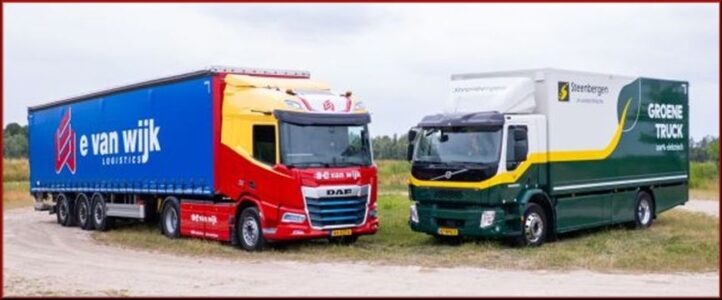
Because we have known E.van Wijk for decades as a pioneer in Romania and have distinguished themselves with it, the DRN presented them with the Romanian Business Award in 2012. You could also label this acquisition as “think global, act local”. What we do not want to leave unmentioned is that Van Wijk has given another logistics entrepreneur a helping hand to also start up in Romania. And thus demonstrated a need for a good network. And this is how the Dutch Romanian Network came into being in 2006 “from entrepreneurs for entrepreneurs”.
Fishing industry
Romania has the first oyster farm in the Black Sea
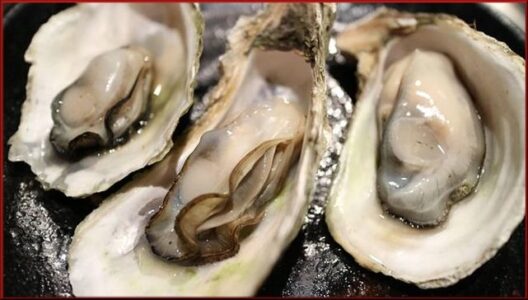
photo Pixabay
What production looks like after a year of experimentation. The first oysters acclimated in the Black Sea were analyzed by Romanian researchers. One year after the establishment of the first oyster farm in the Black Sea, the first results are visible. Specialists say they obtained high-quality oysters weighing more than 150 grams. 
And as the demand for seafood increases in Bucharest restaurants and coastal fish stores, Romanians will be able to find oysters of local production on their menu starting this year. Currently, only imported oysters are available in Romanian restaurants and a kilo costs more than 200 lei.
It is worth mentioning that another member of the Dutch Romanian Network was helpful in Bucharest in finding a place for super coldstore. Again, the networking function played a role.
Sector Retail
Action opens two new stores in Romania
Action, the Dutch discount chain with products under the 5 lei, is opening two new stores in Romania.
Action, the international discount non-food retailer, is expanding with two additional stores two weeks after its official launch in Romania, in Pitești. The new branches are in Oradea and Arad.
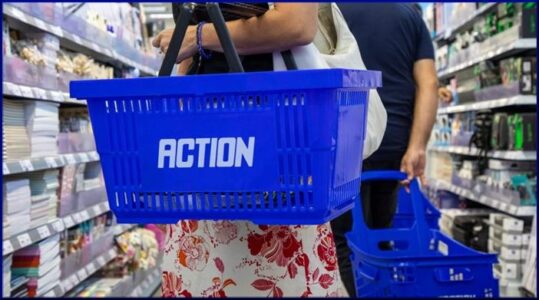
foto Pixabay
Action stores have an area of about 875 square meters and teams of 19 employees. The retailer offers 6,000 products from 14 categories on the shelves of its stores in Romania, from toys and DIY items to home, garden and food products. Action introduces 150 new products every week and the price of 1,500 Action products is under 5 lei.
I would like to thank everyone who contributed to this achievement: our customers, colleagues, suppliers and everyone who supported us,” said Boyko Tchakarov, general director of Action Romania.
At Action, all Action branded and white label cotton products are sustainably sourced (99% Better Cotton and the remaining 1% organic cotton). 100% of the wood used in Action products comes from sustainably managed forests, FSC® or PEFC certified, and all cocoa used in Action products has been Fairtrade since 2022.
Action, the international discount non-food retailer, has 3,000 stores in 14 European countries.Action, the international discount non-food chain, continues to expand in the Romanian market.
In what cities?
“We are very happy with the opening of our second and third stores in Romania, in Oradea and Arad, just two weeks after the opening of the first store in Pitești. Customers welcomed us warmly in Pitești and now we are happy to bring the Action formula closer to more Romanians. Our success is based on our strong formula and the dedication and commitment of our teams, of which we are very proud.
At Action, all Action branded and white label cotton products are sustainably sourced (99% Better Cotton and the remaining 1% organic cotton). 100% of the wood used in Action products comes from sustainably managed forests, FSC® or PEFC-
Shipbuilding sector
Proud of Dutch Glory!
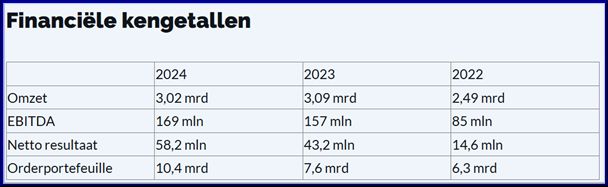
Financially, 2024 was a positive year for the Netherlands’ largest shipbuilding group Damen Shipyards Group (Damen). Turnover remained just above 3 billion euros. Net profit rose from €43 million to €58 million. The order book was filled with a record 5.9 billion euros in new orders and rose to 10.4 billion euros. Damen also expects 2025 to be a financially positive year.
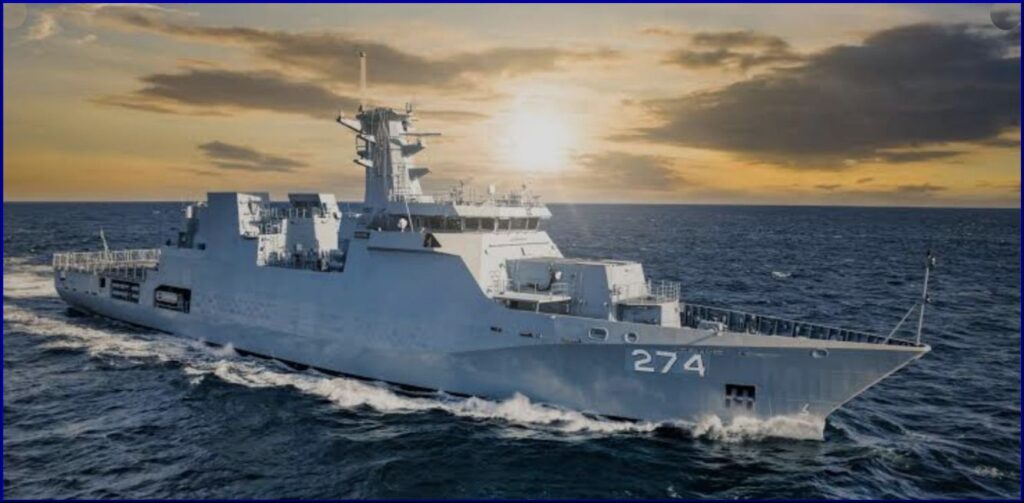
Photo made available by Damen Shipyards
Damen Shipyards Group delivered as many as 146 new vessels to customers in 2024, including the Volta 1 and the Bu Tinah. The former is Europe’s first all-electric tug, which was commissioned by Port of Antwerp-Bruges. The Bu Tinah is the first all-electric tug to be deployed in the United Arab Emirates by SAFEEN Marine Services.
“We are pleased with the amount of work we did last year and the resulting financial performance,” explained CEO Arnout Damen. “As a shipbuilder we are doing well, which also applies to our entire ecosystem of co-makers, innovative smaller companies and knowledge institutions. Together with them, we provide technological innovation and high-quality employment. Thus, together we strengthen the Dutch maritime manufacturing industry, an important pillar of our economy.”
Robust business model
“We see Damen’s profits continuing to rise. But this is not going to happen by itself. There is stiff international competition and rising costs of materials and personnel make profitability a concern. Because we operate in different markets and operate globally, we have a robust business model. We are less vulnerable to sectoral business cycles and local instability. And we, together with the entire Dutch maritime ecosystem, remain fully committed to sustainable solutions in, for example, ports, offshore (wind) energy and in the field of passenger transport.”
Global market leader in tugs
Among ship repair shipyards, the number of completed orders in 2024 at nearly 1,200 was almost the same as in 2023. In terms of completed newbuildings, tugs are still the largest category. More than 60 were handed over to clients last year. This is followed by cutter suction dredgers for the dredging industry with 15 deliveries. The top five newly delivered vessels further consist of fast personnel vessels (13 fast crew suppliers), cargo vessels for coastal shipping (11 Combi freighters) and eight Multi Cat workboats known as “Swiss pocket knife. In addition, notable projects delivered included a second patrol vessel (OPV2600) for the Pakistan Navy (PNS Yamama) and a floating landing platform for space company Blue Origin’s New Glenn missiles (the Jacklyn).
Naval construction and progress of German project
In the field of naval vessels, last year, among others, the navies of Lithuania and Colombia ordered ships. But the focus was mainly on orders in Western Europe. Signing off on the 2024 annual figures took longer because of ongoing talks on the construction of the German F126 frigates. Damen is still in constructive discussions with the German client about the progress of this project. It is being considered whether primary responsibility for the project can shift to German parties, with Damen being and remaining an essential partner. Discussions are expected to take several more months. During the progress of these talks it has become apparent that the commitment of the Dutch government, to support the F126 project with a temporary bridging loan of EUR 270 million, does not need to be further elaborated. Although no longer needed, the willingness of the Dutch government to provide this temporary financial support is appreciated by the group. Together with the Ministry of Defense, Damen now intends to concentrate even more on the ambitious plans of the Royal Navy and the Belgian Navy for the necessary fleet renewal and reinforcement.
Electric and hydrogen
On the civilian side, orders for all-electric ferries from Canada in 2024 stood out. The BC Ferries company ordered four and the City of Toronto two. From Windcat, Damen received the order for a sixth Commissioning Service Operation Vessel. These vessels will transport personnel to and from offshore wind farms and act as a floating base of operations and workshop there. They will be equipped with dual fuel hydrogen technology, significantly reducing CO2 emissions.
Compliance
Damen is further preparing for an alleged fraud lawsuit in relation to some projects between 2006 and 2016, that is, 10 to 20 years ago. A second case involves allegations that sanctions laws were violated. Damen looks forward confidently to the handling of these cases. Damen has invested substantially in its compliance program in recent years and has established a robust and certified framework to support its global operations. No announcements can be made about the substance of pending litigation, other than to say that these cases have no effect on the current financial situation. The latter is also not expected in the longer term.
Vooruitzicht
The future looks bright. Arnout Damen: “We expect 2025 results to at least match 2024. With our order book we are in a strong position, also in 2026 and beyond. Damen is a sustainable and innovative shipbuilder and supplier of maritime solutions, and we can strengthen our position in the coming years in and outside Europe. Together with all our colleagues in the Netherlands and beyond, we want to be Europe’s most innovative and sustainable shipbuilder. I sincerely thank our employees, customers and suppliers for their relentless, daily commitment.”
Damen Shipyards Group delivered as many as 146 new vessels to customers in 2024, including the Volta 1 and the Bu Tinah. The former is Europe’s first all-electric tug, which was commissioned by Port of Antwerp-Bruges. The Bu Tinah is the first all-electric tug to be deployed in the United Arab Emirates by SAFEEN Marine Services.
“We are pleased with the amount of work we did last year and the resulting financial performance,” explained CEO Arnout Damen. “As a shipbuilder we are doing well, which also applies to our entire ecosystem of co-makers, innovative smaller companies and knowledge institutions. Together with them, we provide technological innovation and high-quality employment. Thus, together we strengthen the Dutch maritime manufacturing industry, an important pillar of our economy.”
Robust business model
“We see Damen’s profits continuing to rise. But this is not going to happen by itself. There is stiff international competition and rising costs of materials and personnel make profitability a concern. Because we operate in different markets and operate globally, we have a robust business model. We are less vulnerable to sectoral business cycles and local instability. And we, together with the entire Dutch maritime ecosystem, remain fully committed to sustainable solutions in, for example, ports, offshore (wind) energy and in the field of passenger transport.”
Argrarian Sector
Romanian farmland prices in 2025: huge differences
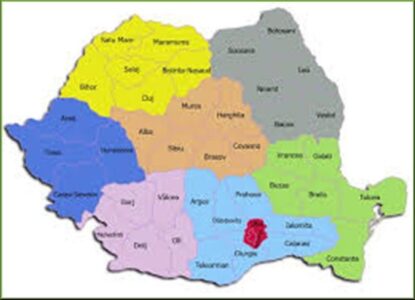
Foto Pixabay
The agricultural land market in Romania is going through a period of contrasts.
Although the average price per hectare continues to rise nationwide, differences between transactions can be enormous, depending on the area, soil quality and access to irrigation. In the south of the country, where agriculture has a long tradition and great potential, farmers and foreign investors compete for valuable plots, and the price of a hectare of farmland can be very high. The value of a hectare of farmland, even within the same area, can range from €6,000 to more than €12,000, depending on many factors other than location. differences between transactions are enormous, depending on the area, soil quality and access to irrigation. In the south of the country, where agriculture has a long tradition and great potential, farmers and foreign investors compete for valuable plots, and the price of a hectare of farmland can be very high. The value of a hectare of farmland, even within the same area, can range from €6,000 to more than €12,000, depending on many factors other than location. AgroTV (a specialized TV channel) recently reported on a situation in the Brăila region (eastern Romania) that clearly shows this discrepancy. “In Brăila, 100 hectares were sold […] to a Danish company for €12,500 per hectare. It is an irrigation area. In the same area, another family member wanted to sell 10 hectares, but was offered only €6,000 per hectare,” farmer Ștefan Muscă explained in an AgroTV program. Clearly, plot size, plot distribution and possible differences in soil quality are factors that can lead to these large price differences. Otherwise, a hectare of agricultural land in Romania in 2025 will be sold on average for €8,414 per hectare, up 4.8% from the previous year. This average masks large differences between regions: the most expensive land is in the Bucharest-Ilfov region (more than €12,000 per hectare) and the cheapest in the northeastern region (about €7,000 per hectare). Current data from real estate ads show that the price of a hectare of agricultural land in Brăila County is estimated at between €8,500 and €10,000 per hectare. Despite the rising trend in agricultural land prices in Romania, land is still relatively affordable compared to Western Europe. However, according to experts, soil quality and health are deteriorating and solutions must be found if Romania wants to fully (sustainably) develop agriculture.
Clearly, plot size, plot distribution and possible differences in soil quality are factors that can lead to these large price differences. Otherwise, a hectare of agricultural land in Romania in 2025 will be sold on average for €8,414 per hectare, up 4.8% from the previous year. This average masks large differences between regions: the most expensive land is in the Bucharest-Ilfov region (more than €12,000 per hectare) and the cheapest in the northeastern region (about €7,000 per hectare). Current data from real estate ads show that the price of a hectare of agricultural land in Brăila County is estimated at between €8,500 and €10,000 per hectare. Despite the rising trend in agricultural land prices in Romania, land is still relatively affordable compared to Western Europe. However, according to experts, soil quality and health are deteriorating and solutions must be found if Romania wants to fully (sustainably) develop agriculture.
Agricover Group joined list of investors exploring possibility of acquiring Patria Bank
Agricover Group, controlled by Jabbar Kanani, is looking with interest at Patria Bank, a bank put up for sale by shareholder EEAF Financial Services BV, sources within the banking industry said.

According to information circulating in the market, several investors are looking at Patria Bank. These include Vista Bank, Libra Bank, a group of businessmen from Turkey, former bankers, Dan Ostahie of Altex and a banking group from the Republic of Moldova. Now Agricover has also been added to the list.
The Agricover Group, through its holding company and Agricover Credit IFN, is the second largest financier in the agricultural sector, after Banca Transilvania.
Patria Bank is 85% owned by the investment fund EEAF Financial Services BV. The remaining shares are owned by individuals and legal entities.
The EEAF Financial Services BV fund is managed by Horia Manda, chairman of Patria Bank’s board of directors.
At the end of 2024, Patria Bank ranked 17th in the Romanian banking system, with a market share of 0.51%.
What concerns us….
 EU competition policy contributes to a level playing field by establishing rules that prevent companies and governments from distorting competition, both through EU-wide rules (such as against cartels and state aid) and through national legislation (such as the Dutch Market and Government Act)
Regularly, we as Dutch Romanian Network are confronted with the fact that the Dutch government ignores EU competition policy and in tenders the business community and thus there is no level playing field. Among other things, it played a role in the award of submarines to the French state-owned company Naval, but it also occurs on a more modest scale in the government’s own conduct of trade missions.
The Dutch Romanian Network cannot be a party to this itself, but it will raise the issue on behalf of its members with the European Commission and inform them about it.
Moldavie
Chisinau is preparing for union with Transnistria. Control of the separatist region is almost a reality. The Russians have already resigned themselves to the loss.

Photo made available by Government of Moldova
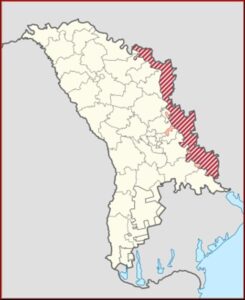
The government in Chisinau is preparing scenarios for the unification of the Republic of Moldova, and the first signs are visible in investment planning and budget calculations that take into account the possibility of the central government soon controlling both banks of the Dniester River, according to reports in the regional press. However, the authorities are avoiding public statements on the matter.
A recent editorial in the European Pravda detailed why, after 35 years, the capital city of Chisinau once again hopes to resolve the Transnistria issue.
Concrete plans are currently being discussed in the Moldovan capital in case the reintegration of Transnistria becomes a reality. Ina Coşeru, deputy of the ruling coalition and chairman of the Committee for European Integration, admitted in an interview with EuroPravda that the government has “drawn up a plan for the integration of Transnistria,” but the document is not public.
 The context that precipitated these discussions is related to changes in gas supply in the region. As of Jan. 1, 2025, the transit of Russian gas through Ukraine was halted, causing an economic crisis in the occupied region, according to analysts. For local authorities, the loss of free gas supplies had serious implications for Transnistria’s budget. The Kremlin resumed deliveries through intermediaries in February, but in much smaller volumes and on the condition that electricity generated in this way would not be delivered to Moldova – a measure intended to maintain pressure on Chisinau and, according to some sources, to support pro-Russian forces in the face of electoral gains that failed to materialize.
A significant shift in the balance of power occurred with the closure of gas traffic through Ukraine : now gas can reach Transnistria only through Moldovan territory, and the authorities in Chisinau have taken advantage of this. Through packages of agreements, the central state of Tiraspol presented a set of political and economic conditions. Dialogues have been more formal in recent months, but following parliamentary elections in early October, Moldova reminded the region’s leaders of its right to impose restrictions. Thus, on Oct. 1, what sources describe as a “gas crisis” began in Tiraspol; at the time of reporting, the situation is moderate, but uncertainty over winter and the risk of a possible blockade are increasing pressure on local authorities,
Sustainability with headwinds
As I have often mentioned here, the United States is in many ways a forerunner. Social and political developments begin there and, with a delay of a few years, are then adopted in Western and Eastern Europe as well. In this respect, the current course of events does not bode well. The U.S. government has declared war on everything to do with Diversity, Equity & Inclusion (DEI) and completely denies the existence of a climate crisis.
That goes a long way. Just last week, I read that the US wants to impose sanctions on countries that have initiatives to green the maritime sector by reducing ship engine emissions. I find that extraordinary. The heavy fuel oil used in this sector is really just a residual product. A super slimy, tarry stuff that, because of viscosity, even has to be preheated before it can be used. What could be against doing this more efficiently and greener?
That the climate is changing is plenty visible. The general scientific consensus is that this is at least partly due to human influences. I personally feel that it is common sense to try to take good care of your own environment and that of others. Moreover, the common perception that there is some kind of opposition between sustainable interests on the one hand and business interests on the other is not true in most cases.
Here’s an example: at NetRom, we are just about to make a second significant investment in solar panels. We are completely covering 1,800 m2 of roof of the second new main building on our campus with panels. This is because NetRom’s biggest electricity consumer is the cooling of our offices during the hot summer months. Then the sun shines a lot and the solar panels generate exactly the power we need for cooling. You will be surprised how quickly we have recouped this investment.
Anyway.
A noticeably less sustainable wind is also currently blowing in Europe. For example, the decision to stop selling new fuel cars by 2035 is being fiddled with, and the entire European edifice of CSRD legislation, which requires organizations to set up serious sustainability reporting, has been delayed for years.
At NetRom, we choose to be CSRD compliant before the end of this year, even if the legal requirement is lacking for the time being. Indeed, I personally assume that we are currently in a temporary stagnation of sustainability initiatives by the government. A small dip in a trend line that will inevitably and unstoppably eventually continue. The ability and desire to look beyond the next cabinet crisis, by the way, is something I see in a lot of companies. After all, it is also difficult to hold on to stagnant and swabbing government policies.
 Recently there was an extremely interesting article by Eva Selderbeek in the Financieel Dagblad, to the effect that sustainability saves Dutch businesses billions. A striking example at one of our clients active in greenhouse horticulture is the company Kubo. They are developing a cultivation strategy that makes CO2-negative horticultural greenhouses possible. It can be done!
So perhaps going along with the current political winds from the US is not the best scenario for once, but rather continuing to develop and innovate smart solutions is the best way forward. With common sense and lots of calculations, we at NetRom hope to continue making the right decisions in this area as well.

The European Parliament adopted a legislative package
The European Parliament has adopted a legislative package that strengthens the visa-free regime suspension mechanism for partner countries. This gives the European Commission new powers to monitor and respond to security, migration or human rights violations.
The package was approved Tuesday by 518 votes to 96. The new legislation allows Brussels to temporarily or permanently suspend visa-free travel for partner countries that fail to meet their obligations, in cases such as hybrid threats, citizenship-by-investment schemes (“golden passports”), deviations from the EU’s common visa policy or serious violations of international law, according to the Kyiv Post.

Image Pixaby
Temporary suspension can last up to 12 months, with the possibility of extension up to a maximum of 36 months. If no action is taken, the visa-free regime may be revoked entirely.
“Visa policy is one of the Union’s most powerful external instruments. With a modernized mechanism, we can respond more quickly to misconduct, including through targeted suspensions of government officials,” said Slovenian MEP Matjaž Nemec (S&D), rapporteur for the dossier.
The reform comes at a time of diplomatic tension between the European Union and Georgia, ruled by the Georgian Dream Party, amid the law on “foreign agents,” the decline in press freedom and the pro-Russian rhetoric of some government members.
European diplomats quoted by Reuters say Brussels could use the new legislative framework to make enforcement of the visa-free regime conditional on respect for democratic values and the rule of law.
“If Tbilisi continues to deviate from European principles, the Commission now has clear tools to act,” said a European source who wished to remain anonymous.
The EU Council is expected to formally approve the reform on Nov. 17, and the legislation will take effect in December.
Currently, 61 countries, including Georgia, Ukraine, Moldova and the Western Balkans, enjoy visa-free travel within the Schengen area. The European Union has revoked this regime only once, in the case of Vanuatu, because of citizenship by investment.
Sorin Pâslaru, ZF: The best years for Romanian business are coming. Everything is in favor of entrepreneurs: capital, knowledge, international support. I do not think that given the conditions under which we ended up spending 10 billion euros on vacations, compared to 10 years ago, when we spent 1 billion euros, there is no money for investment and restarting the economy.
Speech given at the ZF conference “The most dynamic companies in Romania”
Disclaimer

The Dutch Romanian Network newsletter is compiled with great care. The Dutch Romanian Network cannot accept any liability for a possible inaccuracy and/or incompleteness of the information provided herein, nor can any rights be derived from the content of the newsletter. The articles do not necessarily reflect the opinion of the board.

